Where Does it Hurt? Click on any of the Green Dots to Find out More
Plantar Fasciitis
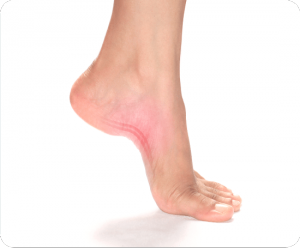
Do you suffer from intense heel or arch pain? It could be Plantar Fasciitis. Plantar fasciitis is a very painful injury, and the most common cause of heel pain. The plantar fascia is a thick band of tissue that runs along the bottom surface of the foot connecting the heel bone to the ball of the foot. Excessive stretching of the tissue while running or walking can cause tiny tears that lead to irritation, inflammation and pain on the bottom of the heel, the arch of the foot or both locations. If left untreated, plantar fasciitis can cause other conditions like heel spurs. Our heel bone is the largest bone in the foot and absorbs the most amount of shock and pressure. Plantar fasciitis is most painful with your first steps in the morning or after a long rest because the plantar fascia contract and become less flexible while you are off your feet. Just like muscle tissue, the plantar fascia contracts and becomes less flexible when it is cold and inactive. The pain may decrease as the day progresses and the plantar fascia is stretched and warmed up with use. However, the pain may return after long periods of standing, walking or running. This is especially common if you are wearing shoes with inadequate arch support.
Causes: Over-pronation, or excessive rolling inward of the foot while walking, is the most common cause of plantar fasciitis.
- Excessive rolling inward of the foot or over-pronation
- Tight calf muscles or Achilles tendons
- Flat feet or high arches
- Improperly fitted shoes
- Inadequate arch support
- Standing, walking or running for long periods
- Excess body weight
Diabetic Neuropathy
The most common symptoms of Neuropathy include numbness and loss of feeling, usually in the feet and hands. Diabetic Neuropathy can cause insensitivity or a loss of ability to feel pain, heat, and cold. Diabetics suffering from Diabetic Neuropathy can develop minor cuts, scrapes, blisters, or pressure sores that they may not be aware of due to insensitivity in their feet. If these minor injuries are left untreated, complications may result and lead to ulceration — and possibly even amputation.
Causes: Diabetic Neuropathy is a complication of diabetes that affects the nerves. The most common type of Diabetic Neuropathy is called peripheral neuropathy and affects the peripheral nerves, which are the nerves that go out from the brain and spinal cord to the muscles, skin, internal organs, and glands. Peripheral neuropathy impairs proper functioning of these sensory and motor nerves.
Metatarsalgia
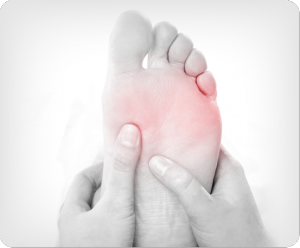
Metatarsalgia is the medical name for pain in the ball of the foot.
Causes: Metatarsalgia can be caused by several factors, including the following:
- Activities that put repeated stress on the ball of the foot (i.e., jogging)
- Intense training or overuse
- Ligament injuries and joint irritation
- Thinning or shifting of foot pads
- Neuroma, a painful mass of nerve tissue
- Abnormal foot shape
- Excessive rolling inward of the foot (over-pronation)
- Excessive rolling outward of the foot (over-supination)
- Calluses or skin lesions that affect weight distribution
- Improperly fitted shoes
- Shoes that are too small
- High heels
Achilles Tendonitis
Do your calf muscles ache? Is the back of your heel and ankle swollen or tight? If so, you may be suffering from a common condition known as Achilles tendonitis.
Achilles tendonitis is an injury caused by overuse of the large tendon that connects the calf muscles to the back of the heel bone. When overused, the Achilles tendon can get irritated, painful, stiff and swollen. Although it is the largest and strongest tendon in the body, it is also the most injury-prone due to its limited blood supply and the enormous stress placed upon it. Achilles tendonitis can worsen if not treated properly, so address the problem promptly.
Causes:
- Excessive rolling inward of the foot (over-pronation) while walking
- Flat feet or collapsed arches
- Short Achilles tendon
- Tight calf muscles
- Heel bone deformity
- Inadequate stretching prior to activity
- Improperly fitted shoes
- Inadequate arch support
- Sudden increase in physical/athletic activity
- Chronic overuse
- Direct trauma or injury
Bunions
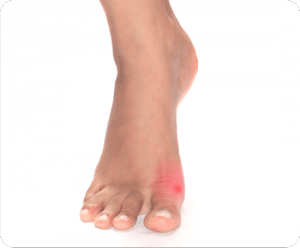
Bunions are a very common condition that affects women significantly more than men due to poorly fitted footwear. A bunion is a bony protrusion that can occur at the base of the big toe joint. This bony lump can cause friction and pain when wearing shoes.
Bunions are frequently associated with inflammation of the bursa, a fluid-filled sac that helps cushion the bones of the foot. Another type of bunion, called a Tailor’s bunion or bunionette, forms on the outside of the foot on or at the base of the little toe joint. Smaller than a typical bunion, it is caused when the little toe is pressed in towards the big toe.With continued displacement of the big toe towards the smaller toes, a bunion can lead to the big toe resting under or over the second toe (a common condition called overlapping toes). It also can lead to a toe muscle deformity called hammer toes.
Causes:
- Excessive rolling inward of the feet (over-pronation) while walking
- Various arthritic, genetic and neuromuscular diseases
- Abnormal foot function
- Improperly fitted shoes
- Wearing shoes with a smaller, constrictive or pointy toe box
Morton's Neuroma
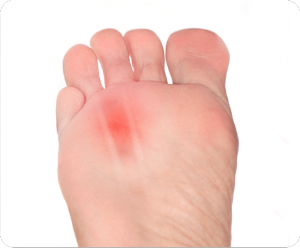
Morton’s Neuroma is a common foot problem associated with pain and swelling of nerve tissue in the ball of the foot. It usually occurs between the 3rd and 4th toes, but also can occur between other toes.
Causes:
- Excessive rolling inward of the foot (over-pronation)
- Excessive rolling outward of the foot (over-supination)
- Wearing high heels or shoes that are too small and pinch the nerve tissue
Morton's Toe
Morton’s toe is a common forefoot condition in which the second toe extends out farther than the big toe. This results when the long, finger-like bone inside the foot that connects to the big toe is congenitally shorter than the bone connected to the second toe. Morton’s toe causes excessive pressure behind the second toe at the ball of the foot resulting in pain. The constant pressure placed on the second toe while walking or standing can lead to callus formation behind the second toe at the ball of the foot. Excessive rolling inward of the foot (over-pronation), bunions and hammer toes are also common with the condition.
Causes: This condition is present from birth and is aggravated by wearing improperly fitted shoes
Mallet Toes
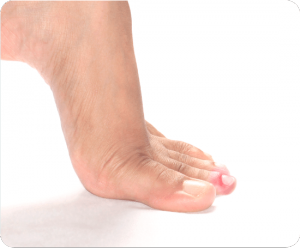
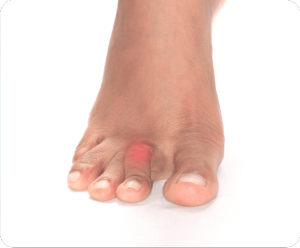
If your toes appear crooked or bent downward you may be suffering from hammer toes, mallet toes or claw toes. These three very similar toe deformities result in shortening of the toe tendons thereby limiting toe motion, and causing claw-shaped toes and painful rubbing inside shoes. A hammer toe, mallet toe or claw toe is a toe that is contracted at one or more of the joints of the toe, and can lead to severe pressure and pain. Ligaments and tendons that have tightened cause the toe’s joints to curl downwards. Hammer, mallet and claw toes may occur in any toe, but rarely the big toe. There is often discomfort at the top part of the toe that is rubbing against the shoe and at the tip of the toe where excessive pressure often causes painful corns.
Causes:
- Poor foot function such as over pronation (excessive inward rolling of the foot) or oversupination (excessive outward rolling of the foot) are common causes of hammer, mallet and claw toes.
- Poor fitting shoes are also a common cause.
- Various forms of arthritis can also lead to many different forefoot deformities, including hammer, mallet and claw toes.